

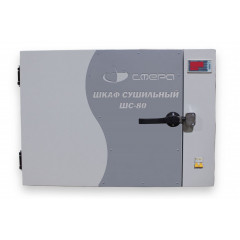
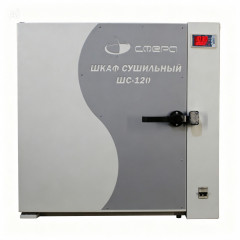
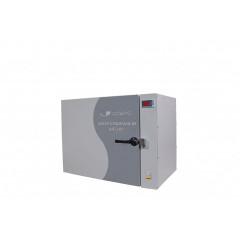

Laboratory drying cabinets up to +350 degrees

Intuitive control:
digital PID controller
with display
digital PID controller
with display

Wide temperature
range: from +50°C
to +350°C
range: from +50°C
to +350°C

Reliable thermal insulation:
energy savings
and safety
energy savings
and safety
Laboratory drying cabinets (up to +350°C) for precise thermostatting and drying
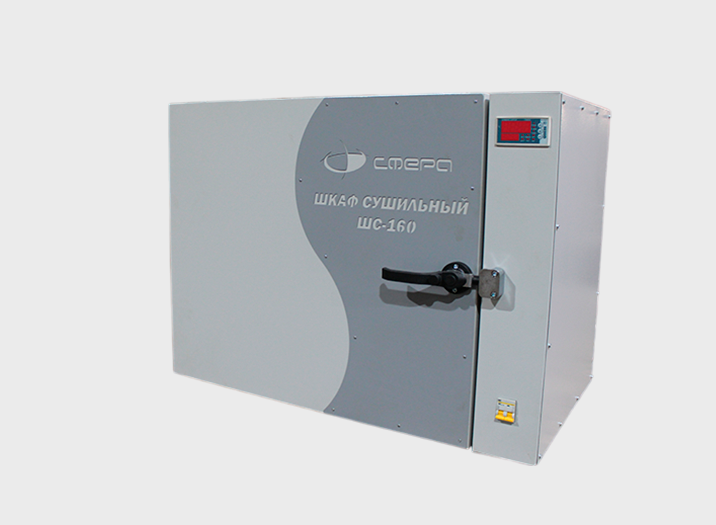
A professional laboratory drying cabinet is designed for efficient drying, thermostatting, calcination and other heat processes with materials and samples in research, industrial and teaching laboratories. It ensures precise temperature maintenance and uniform heating throughout the internal volume thanks to a modern air exchange system.
Advantages:
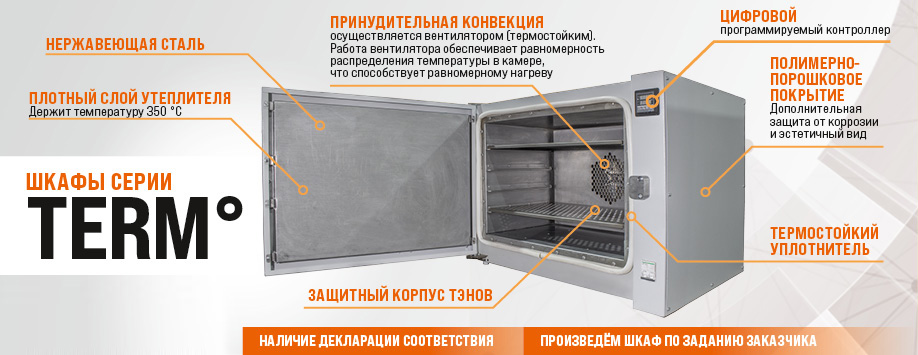
- Uniform heating through forced convection;
- Strong construction – stainless steel chamber;
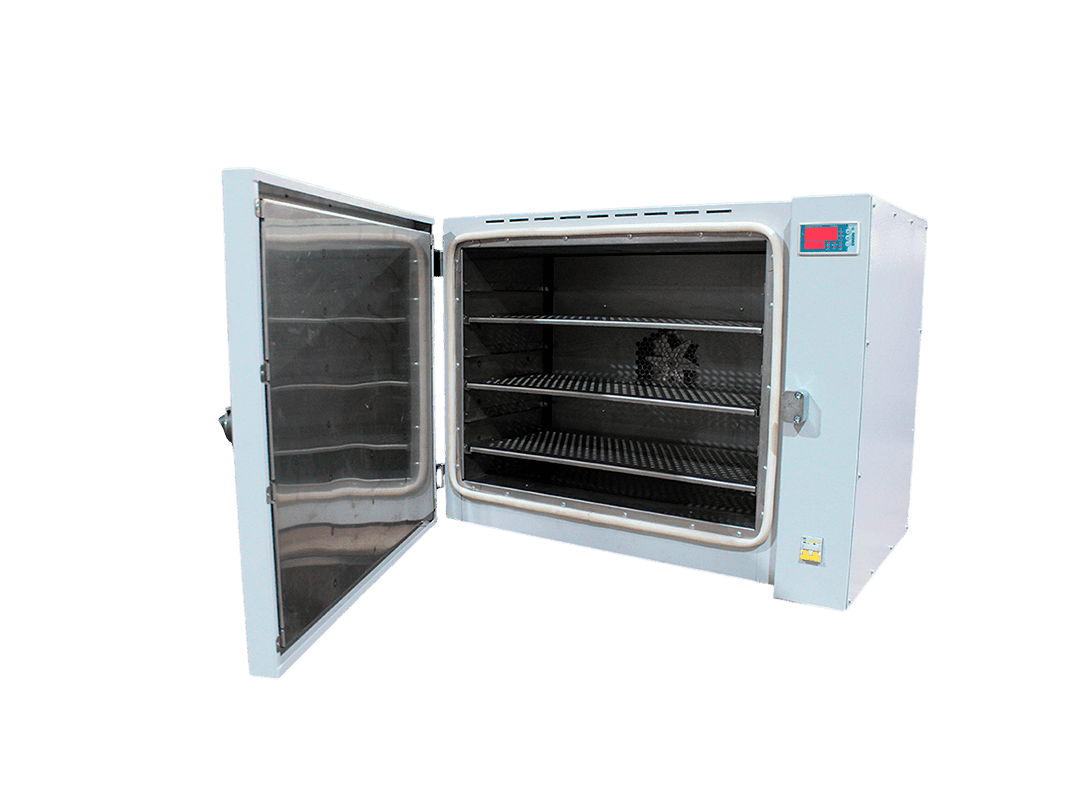
- Shelf configuration: adjustable stainless steel shelves.
 Place an order
Laboratory drying cabinets up to +350 degrees
Reliability and precision of temperature control
The cabinet is equipped with a modern digital programmable controller (PID regulator), which ensures precise setting and stable maintenance of the temperature throughout the working volume. Overheat protection guarantees the safety of the work and the integrity of the samples.
Uniform temperature regime
Hot air is circulated by a powerful fan located in the rear wall of the chamber. This creates a uniform temperature field (minimal temperature gradient) with no "cold zones", which is critical for obtaining reproducible and reliable results.
Ergonomics and durability
The outer body is made of strong steel sheet with a wear-resistant powder coating. The inner chamber is made of AISI 304 or AISI 310 stainless steel, which provides corrosion resistance to aggressive environments and easy cleaning, and the door is fitted with a heat-insulating gasket.
Fields of application
Drying cabinets are used for various purposes:
- Drying glass and quartz laboratory glassware;
- Thermostatting and conditioning of samples;
- Impregnation and calcination of materials in metallurgy and ceramic production;
- Sample preparation in agrochemistry and the food and pharmaceutical industries;
- Evaporation of solvents, sterilisation (not for medical purposes) and other laboratory processes.


Evaporation of solvents


Sample preparation


Impregnation and calcination


Thermostatting


Drying of containers