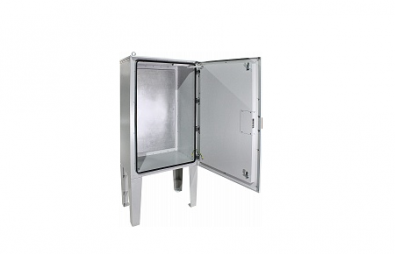
From A to Z: cabinets for flammable liquids
Combustible liquids are oil and its components, petroleum products (petrol, kerosene, various machine oils), varnishes and paints made with organic solvents, ethyl, methyl, isopropyl and other alcohols, solvents and degreasing liquids.
Combustible liquids (CL) are defined as liquids that can continue to burn on their own after the ignition source is removed and have a flash point above 61 ºC.
Flash point is the temperature at which a combustible liquid forms vapours that ignite on exposure to an open flame and can sustain combustion on their own.
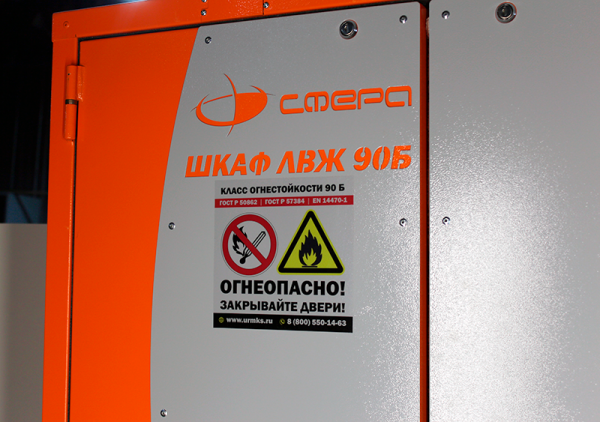
Flammable liquids (FL) are combustible liquids with a flash point below 61ºC. According to GOST 19433-88 they are divided into three subclasses:
- with a low flash point from -18ºC in a closed cup (subclass 3.1): acetone, petrol, ether;
- with a medium flash point from -18º to +23ºC in a closed cup (subclass 3.2): benzene, ethyl alcohol, ethyl acetate, solvents for paints and varnishes;
- with a high flash point from +23º to +61°C in a closed cup (subclass 3.3): fuel oil, diesel fuel, kerosene, white spirit, oils, varnishes.
It is important to remember that it is not the liquids themselves that burn, but a mixture of their vapours with air when it reaches a certain concentration.
For a fire caused by flammable liquids to start, only 3 conditions are needed: an ignition source (hot surface, mechanical or spark discharge, open flame, static charge, etc.), a combustible substance and oxygen.
Unfortunately, these three components occur much more often than we would like. News reports confirm this: in December 2019 there was an industrial fire at a paint and varnish plant in Yekaterinburg. Its area reached 800 m². On 21 April 2022 a workshop producing solvents and paints at the Dmitrievsky Chemical Plant in the town of Kineshma caught fire. A month later, in May 2022, a fire broke out at a synthetic detergent plant in Kazan. In June 2023 an explosion of a toluene tank led to a fire at the Balzam plant in Nizhny Novgorod. In Saratov in August 2023 a warehouse with flammable liquids caught fire over an area of 200 m².
We have listed only the largest fires of recent years that were reported by the local media; now think about how many there really were?
Fires of flammable and combustible liquids are class B fires, and such fires are very dangerous.
First, such fires must never be extinguished with water! The point is that petrol, kerosene and other combustible substances are lighter than water and, when you try to flood them, will only spread, increasing the fire area. That is why special powder or foam extinguishing agents are used to put out such a fire.
Second, the process produces a great deal of combustion products that cause irreparable harm to human health. In addition, the burning of oil and petroleum products can be accompanied by the release of toxic substances – sulphur dioxide and hydrocarbons with hydrogen sulphide – which spread downwind for hundreds of kilometres.
Thus, fires of combustible liquids endanger the life and health not only of the plant's employees but also of those who live or work nearby.
That is why a company on whose premises a class B fire has broken out will feel the full negative consequences of careless storage of flammable liquids.
First, if there are casualties, the fire is classified as an emergency and a fire-technical examination is carried out. During such an investigation, specialists establish the causes of the fire and determine the amount of the fine the guilty party will have to pay. For an organisation, the amount of such a fine is measured in hundreds of thousands of roubles!
And this is not yet the final amount of losses, because the premises damaged by the fire will also have to be restored and new equipment bought (often very expensive).
Second, a fire of combustible liquids at a plant can lead to a production stoppage and prolonged equipment downtime.
Finally, even a small fire will damage the company's reputation. In a labour shortage, when enterprises are engaged in a real fight for specialists, you need to minimise all the risks that will work against you in the long-term contest for new employees.
So, what equipment is suitable for the safe storage of combustible liquids?
Enterprises that use combustible liquids are often forced to create special storage conditions for such substances, which can differ radically depending on the type of liquid and its volume, as well as automatic foam fire-extinguishing systems. These points are usually determined at the building design stage.
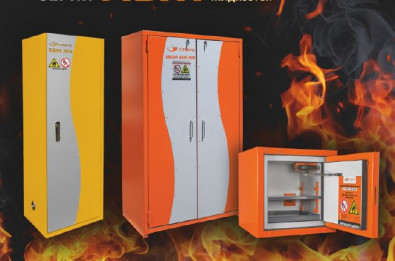
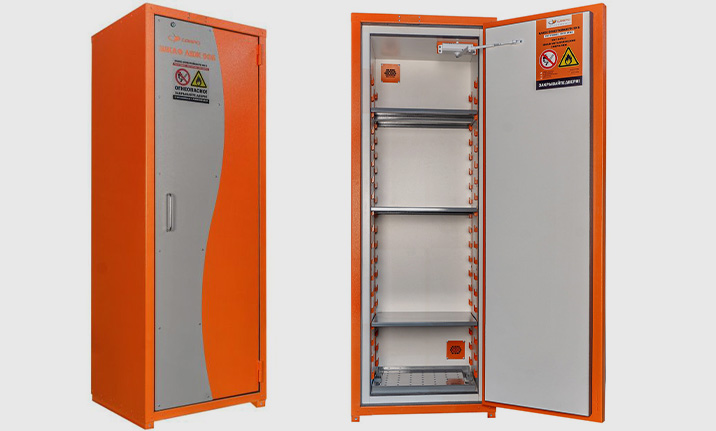
The optimal alternative where combustible liquids are stored has become cabinets for storing flammable liquids. This is what they are most often called. Sometimes the terms fireproof, heat-resistant or fire-protection (cabinet) are used.
Which documents confirm the quality of flammable liquid cabinets?
Certificates of conformity or declarations of conformity. The difference between them is enormous.
Certificates of conformity can be obtained from a certification body after the qualities declared by the manufacturer are confirmed by laboratory tests. If the real quality of the product does not match what is stated in the document, the certification commission bears the responsibility for it. Accordingly, accredited certification bodies are more interested in a scrupulous check and assessment of product qualities than in hastily issuing certificates left and right.
A declaration of conformity (under the Technical Regulations of the Customs Union) can be drawn up by the manufacturer itself, and unlike a certificate it is easier to obtain. Such a declaration confirms the conformity to a certain Customs Union regulation declared by the manufacturer. Whether any tests are carried out in the process is a big question, and the answer depends entirely on the manufacturer's conscience.
Now a few words about GOSTs
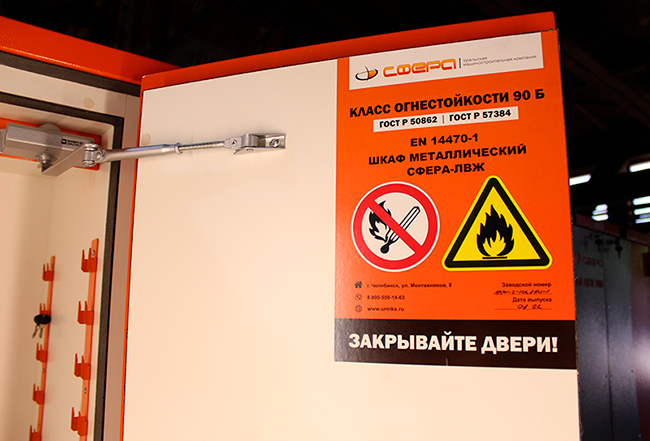
There are standards used by most manufacturers of flammable liquid storage cabinets. Most often these are GOST R 50862-2012 and GOST R 57384-2017. True, they deal with the design of safes and fire-resistant filing cabinets, not cabinets for storing flammable liquids. Nevertheless, these standards describe fire resistance test methods and fire resistance classes. There are no other, more suitable Russian standards that set out requirements for the design of flammable liquid cabinets yet.
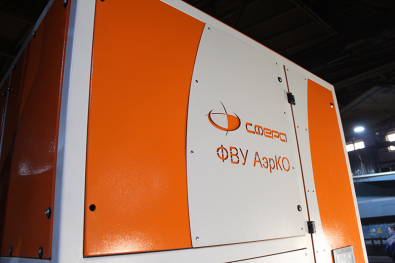
Therefore, the benchmark for such norms today is the European standard EN 14470-1. This document sets out all the criteria that equipment for storing flammable liquids must meet. It is on this standard that URMK "Sfera" relies as a leading manufacturer of cabinets for the safe storage of flammable liquids.
Fire resistance classes of flammable liquid cabinets
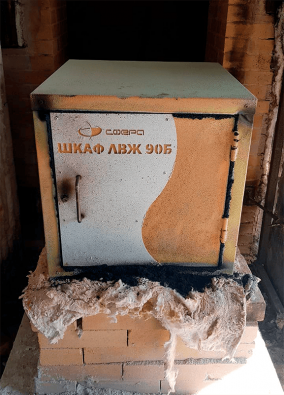
The fire resistance class is the first thing to pay attention to when choosing a flammable liquid cabinet. Each such cabinet has a certain fire resistance class: 30B, 60B, 90B or 120B.
The figures in the fire resistance classes mean 30, 60, 90 or 120 minutes respectively – i.e. the length of time during which flammable liquids and fuels and lubricants stored inside the cabinet with the door closedwill be safe in case of fire. Moreover, the fire resistance class reflects the lower threshold of fire resistance: practice (including laboratory tests) shows that cabinets can withstand fire longer than stated in their fire resistance classes.
How do SFERA flammable liquid storage cabinets work?
When a fire breaks out at an enterprise that has combustible liquids, the main danger is that containers with combustible liquids may explode and make fire-fighting much harder. You will definitely not be able to cope with such a fire on your own!
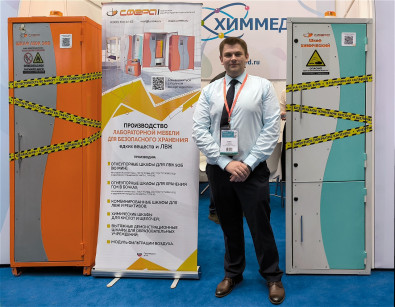
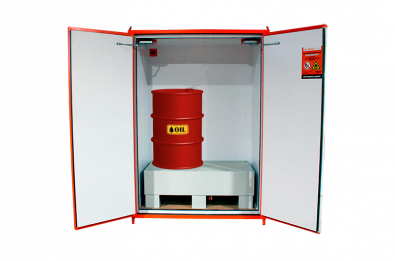
"SFERA" flammable liquid cabinets isolate combustible liquids from the source of ignition for the stated time. How do they work? When the temperature rises to 70±10 °C the protection is triggered: a special non-volatile device automatically blocks the ventilation openings and doors of the cabinet and seals it – to limit the ingress of heated air, volatile vapours and smoke from outside. Of course, such a protection system will work only if the cabinet doors are closed. Therefore, if you have a flammable liquid cabinet at your plant, make sure its doors are not left wide open!
Flammable liquid cabinets are designed to protect the substance inside from external heat and a rise in temperature to a critical value.
The cabinet cavities contain heat-insulating materials, and the door openings have thermally expanding tape, which together prevent the temperature inside the cabinet from rising for the stated time. Moreover, they are safe for humans, non-combustible, and do not release corrosive and toxic substances into the air when heated.
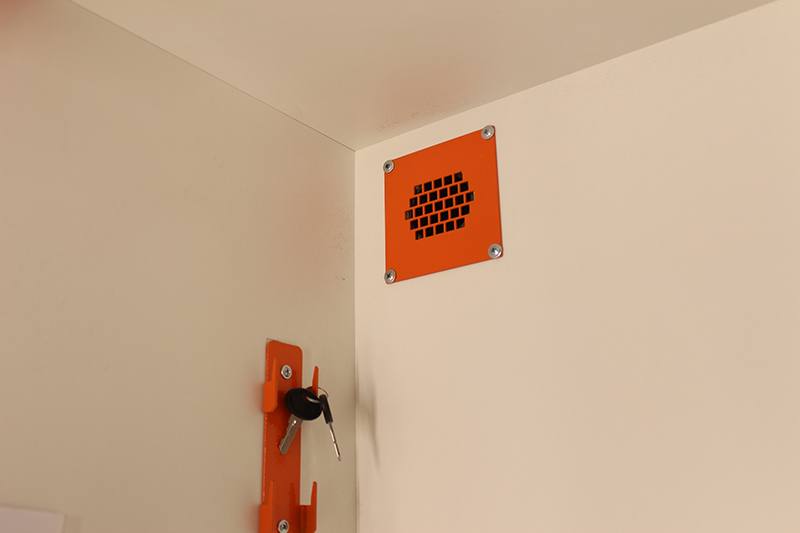
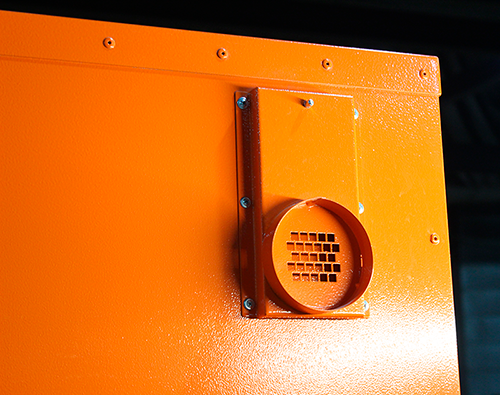
The shelves of such equipment are made of galvanised steel coated with chemical-resistant paint. The shelves of cabinets made by URMK "SFERA" slope slightly towards the back wall of the cabinet. In case of spills the liquid does not spread over the whole shelf but drains into the tray, from where it is easier to remove.
Remember: if you work with flammable liquids, safety must come first. Do not make the survivor's mistake – store combustible liquids correctly! This will preserve the lives and health of employees and the company's reputation, and minimise the risk of fire when working with combustible liquids.
The flammable liquid cabinet catalogue gives their technical specifications and prices.
Read more